Orthodontist in Tirana · Dr. Doniano Xhanari
Class II and Class III bite correction
Individual planning for different relationships between upper and lower teeth and jaws, within Dr. Doniano Xhanari’s orthodontic practice.
Why are Class II and Class III assessed differently?
These terms describe different bite relationships. Tooth position, jaw growth and skeletal relationships influence the options. A diagnosis requires more than whether the front teeth look straight.
What is documented in the case archive?
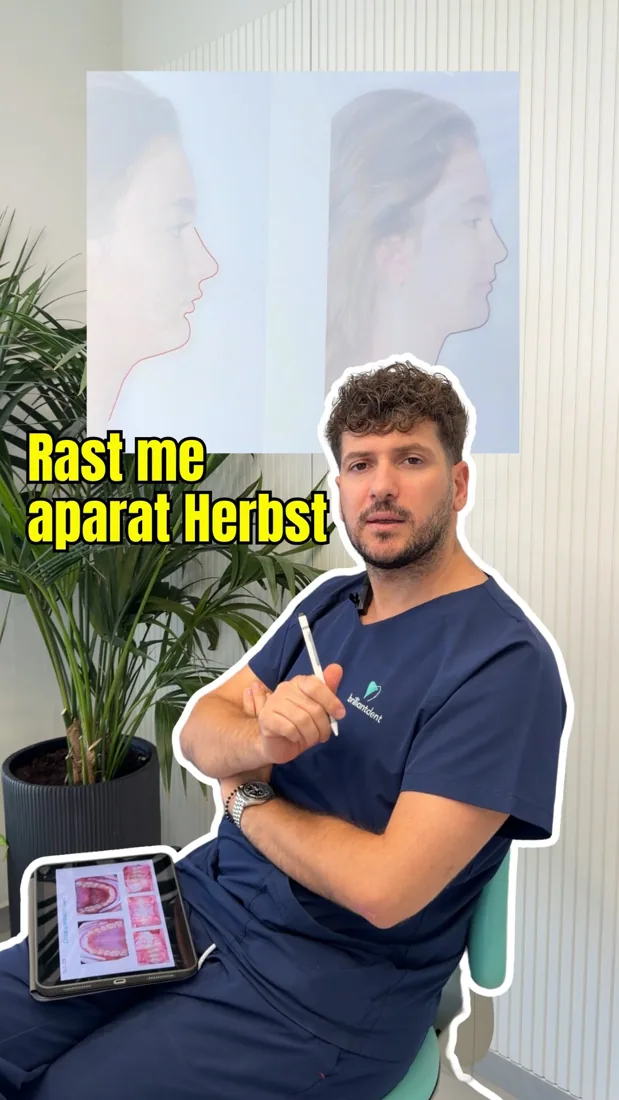
Amena’s story concerns Class II bite correction. The Herbst posts document another appliance approach and follow-up visits. These are Class II examples; they must not be presented as Class III results. Dr. Doniano’s professional profile also identifies Class III assessment and treatment within his clinical focus.
When might other specialists be involved?
Some jaw discrepancies need coordinated orthodontic and maxillofacial assessment. Ask whether the problem is dental, skeletal or both, and how age, periodontal health and treatment goals affect the alternatives. An appliance name alone does not determine the right plan.
Source & context
General patient information; your consultation determines the appropriate treatment.
British Orthodontic Society ↗Related patient stories
Individual case updates, not predictions of your result.